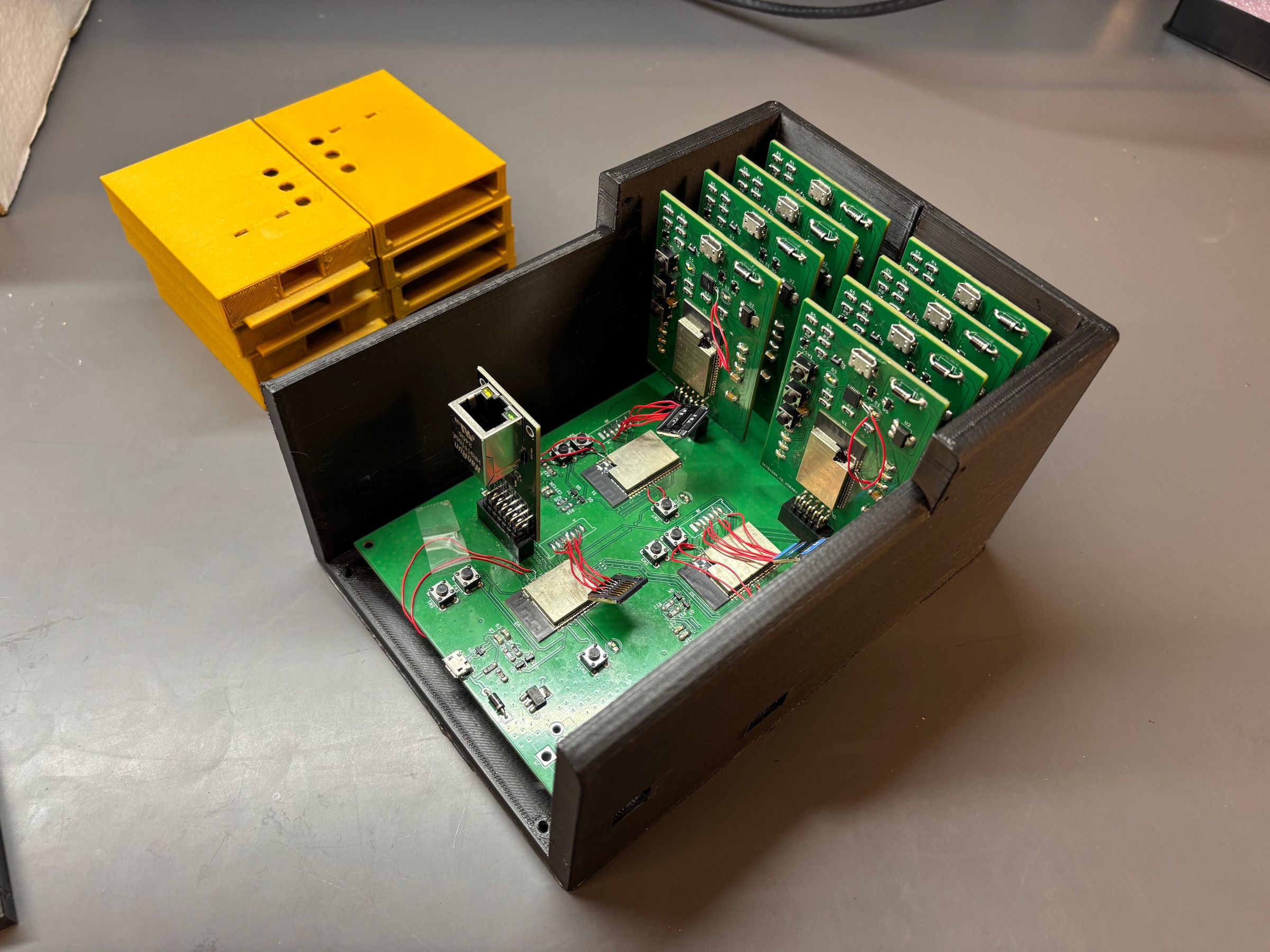
BoilerNet was designed as a modular platform for network-attached storage and edge computation, with low-power operation as one of the project goals. ESP32-based nodes, custom hardware, swappable storage and compute elements, and a cloud-hosted interface formed one distributed system.
One system, several engineering domains
At the system level, BoilerNet combined custom network/switch and compute-node PCBs with ESP-IDF firmware, a FastAPI backend, a Streamlit frontend, and a physical enclosure. The repository also preserves model-training and inference work used to explore compute workloads.
A simplified editorial map of the project layers described in BoilerNet’s public documentation.
The design targeted modular hardware, plug-and-play workloads, low-power operation, and the ability to scale by adding nodes. Those goals made the interfaces between boards, storage, firmware, networking, and software as important as any single component.
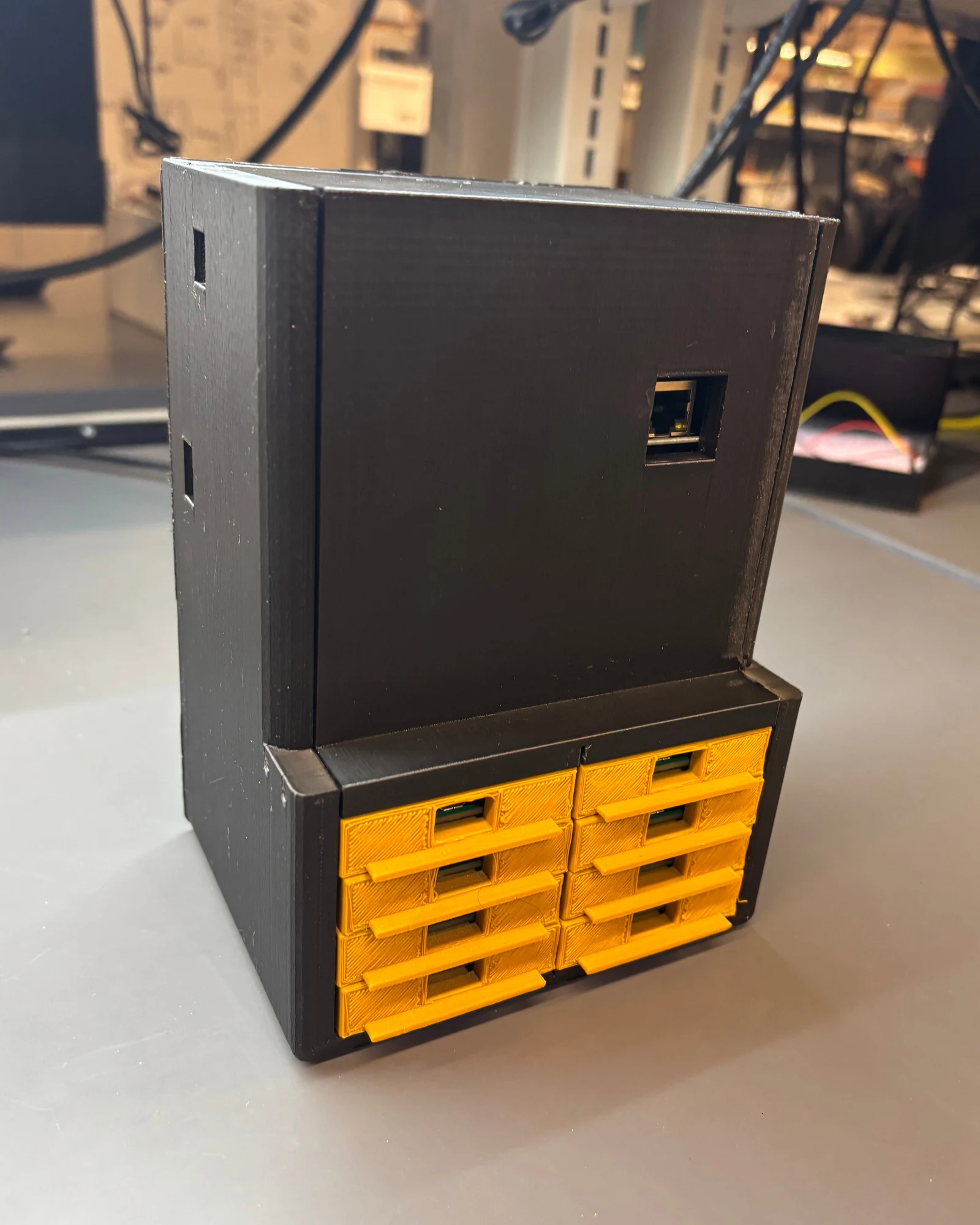
The assembled prototype combines custom electronics and modular bays in a vertical chassis.
Open for full-size view ↗My contribution
I focused on PCB and hardware-side design alongside Gokulkrishnan Harikrishnan. The public project documentation attributes the PCB work to us jointly. BoilerNet was a four-person effort; firmware, backend, interface, model work, and mechanical integration are project-wide accomplishments unless noted otherwise.
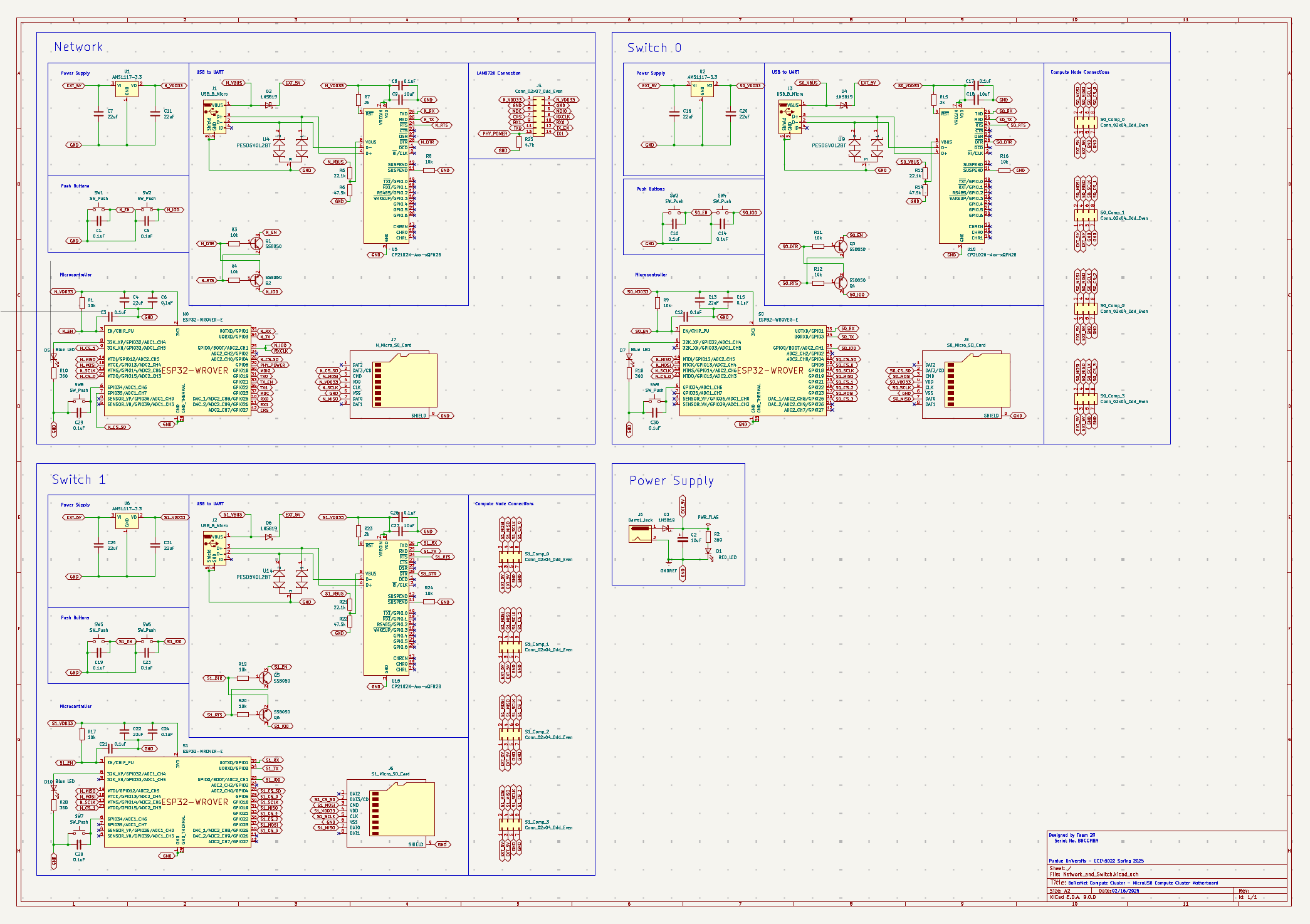
SCHEMATIC / NETWORK + SWITCH
 Open full resolution
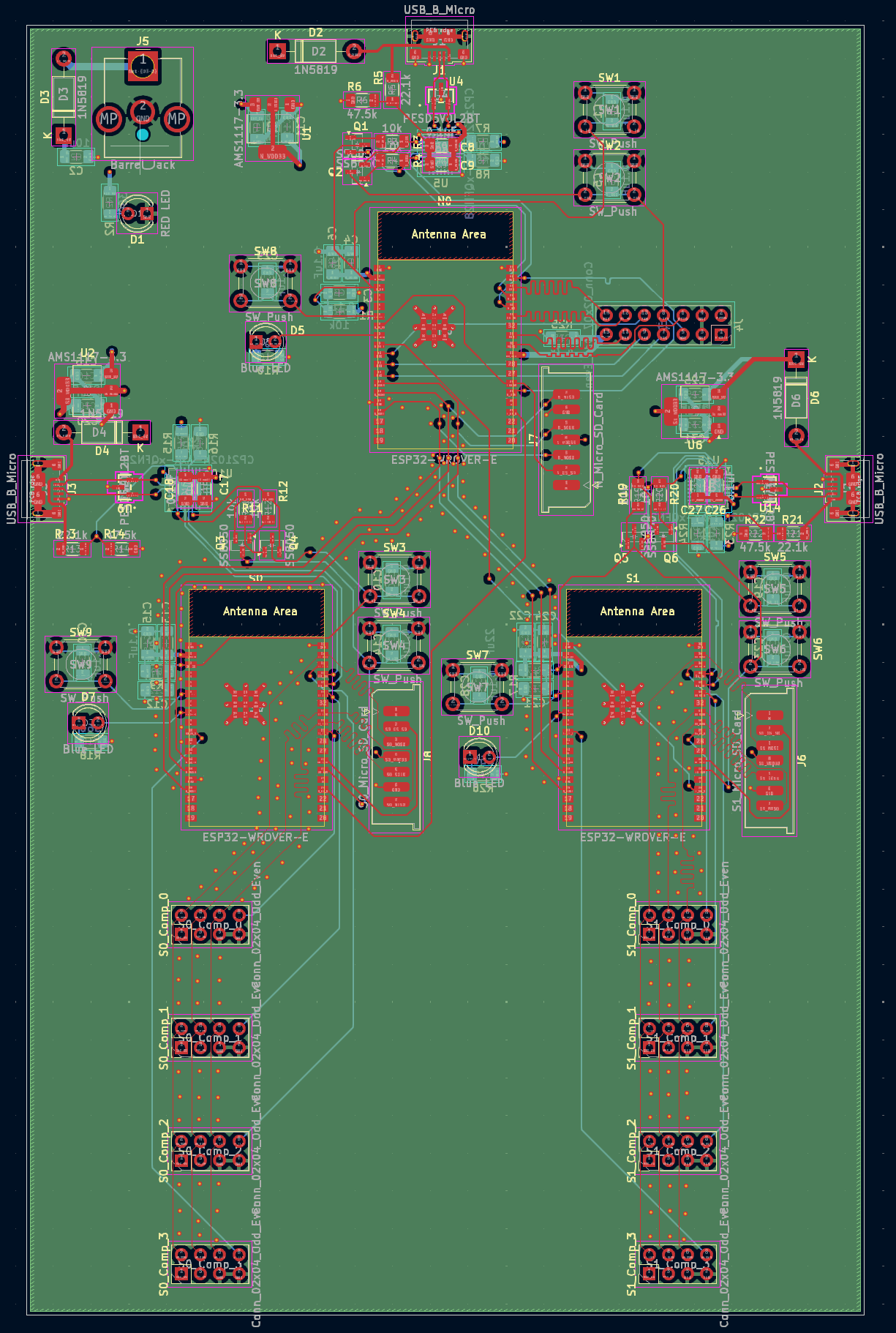
 LAYOUT / NETWORK + SWITCH
 Open full resolution
 The network and switch schematic and PCB layout. The board work is jointly attributed to Gautam Nambiar and Gokulkrishnan Harikrishnan. Open either panel to inspect the original-resolution drawing.
Source ↗Iteration is part of the record
The repository documents fly-wire fixes made while integrating the first PCB designs. That detail matters: the engineering record includes not just a finished enclosure, but the corrections required to turn an initial design into working hardware.
Specific failure modes, validation results, and a second-revision plan are intentionally left out until they can be described from Gautam’s own notes rather than inferred from the repository.
Result
The team demonstrated BoilerNet at Purdue’s SPARK S’25 design showcase and received a Purdue ECE Senior Design Award. Purdue described the project as a distributed, scalable, microcontroller-based edge-computing cluster.
The team’s project overview and working-system demonstration. The privacy-enhanced YouTube player loads only after Play is selected.
YouTube ↗The public repository carries the deeper record: source code, tests, PCB source and Gerbers, enclosure CAD, reports, diagrams, and demo material.